
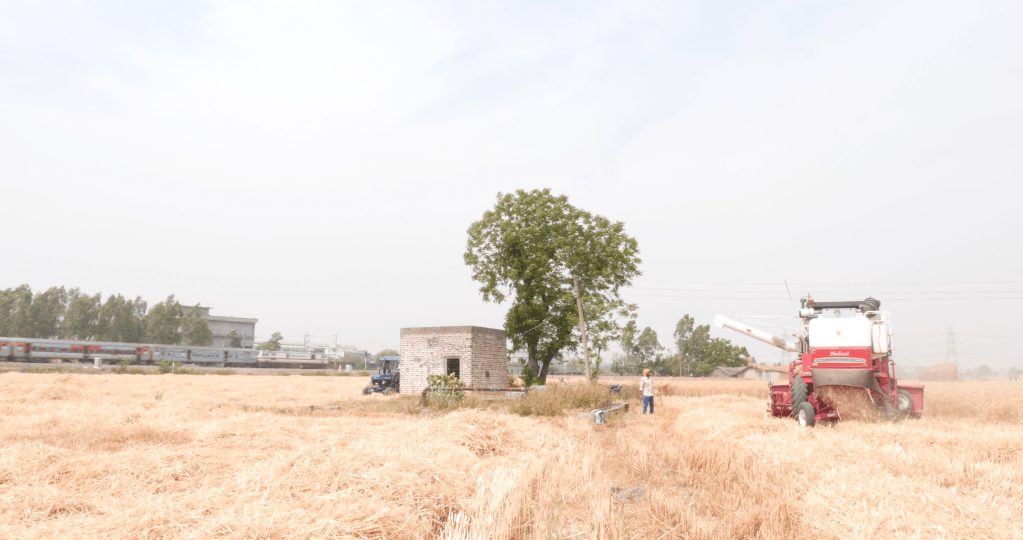
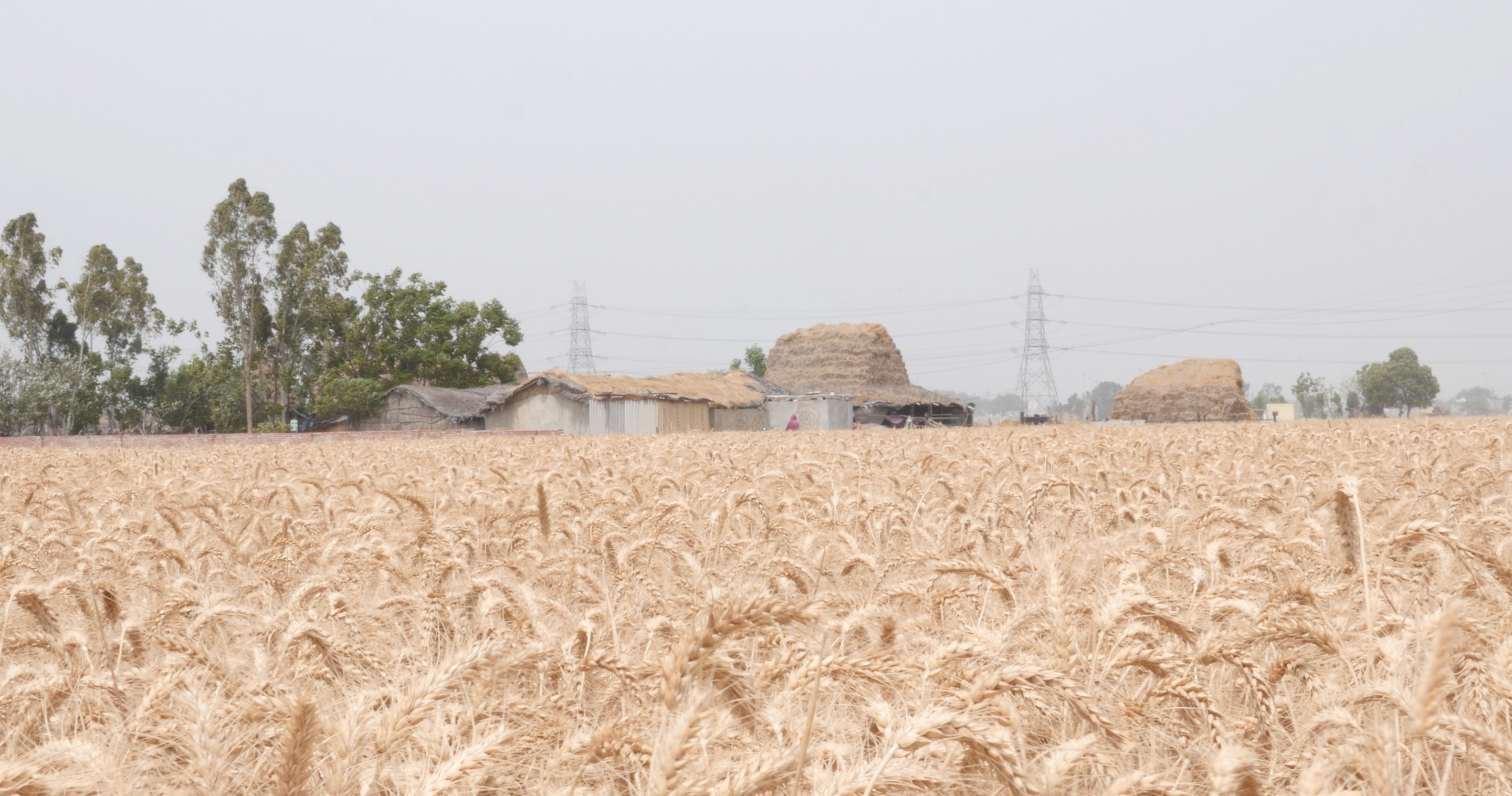
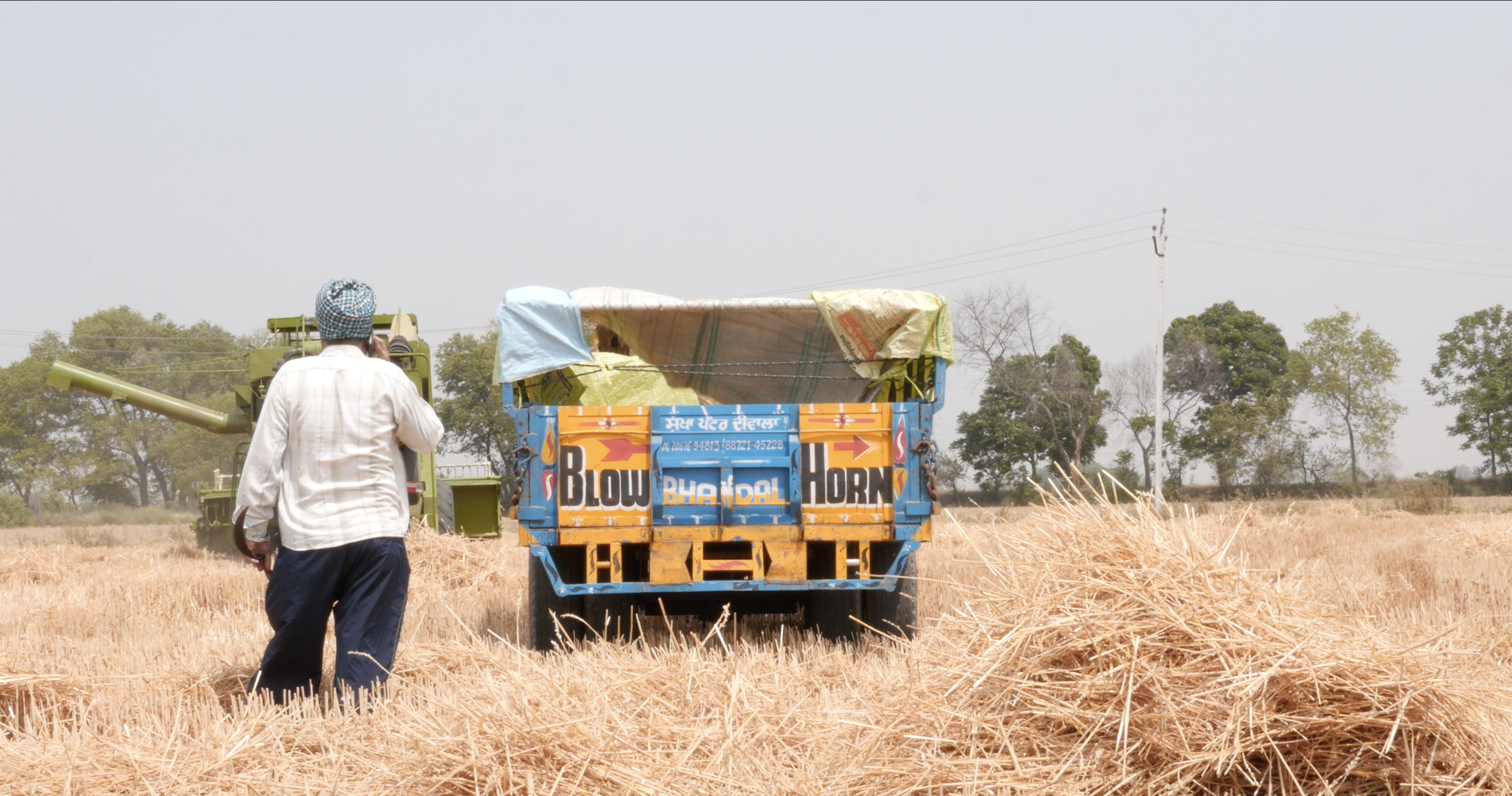
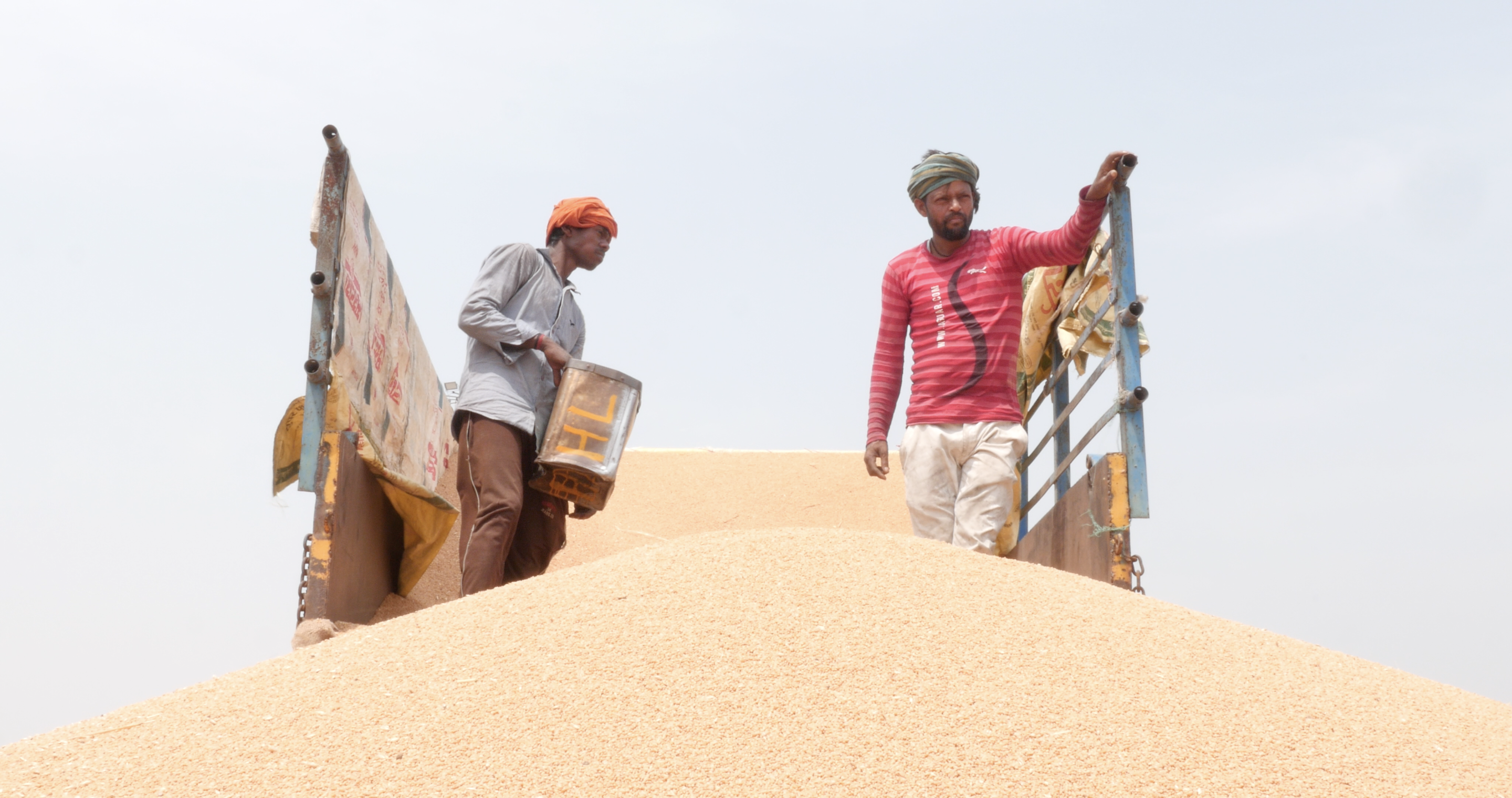
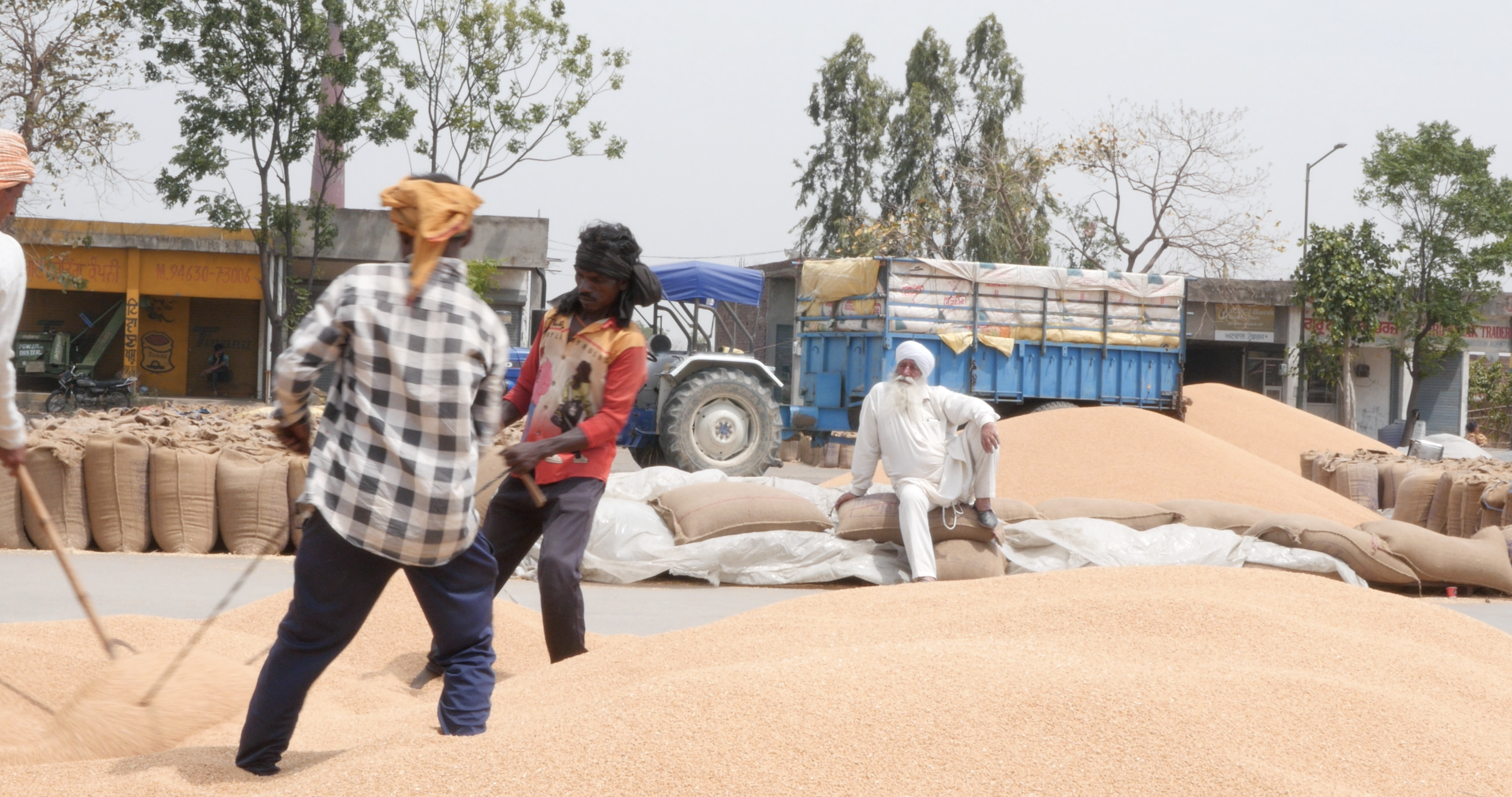
Fed by the glacial waters of the Himalayas, Punjab derives its name from the five rivers that flow through it. These mighty waterways have for centuries had their life-bringing contents harnessed by a web of canals, facilitating agricultural activity which is now responsible for producing much of India’s food grains. It can come as no surprise that the state is known as the ‘granary’ and ‘food basket’ of India. The region is situated on a flood plain upon which nutrient-rich sediment has over time been deposited, giving rise to an alluvial soil perfect for the growth of crops. The Indian Government, and the British Raj before them, recognised this and so the mass production of staple crops was prioritised over the subsistence agriculture that was once prevalent.
With a rising population and many people choosing to live and work in urban centres, a smaller number of people can be relied upon to produce for those elsewhere. This is a global story. Farmers the world over are pressed for their produce and are commonly at the mercy of corporations and their buying power. However, for the farmers of Punjab, this is not a dynamic that they must worry about entirely – at least, not until recently. For years, the Minimum Support Price ensured that whatever wheat was grown was bought for a fair price by the government. This is just as well because there is a lot of wheat going. Punjab is not only geographically dedicated to producing cereals, but is academically and intellectually dedicated to the cause as well. The Punjab Agricultural University has a direct connection to the farming communities of the local area. New mechanical and chemical technologies emerging from researchers at the university reach these communities first and farmers enjoy subsidised access to them through cooperative hubs.
Punjabi farms have long been at the frontline of cutting edge agro-innovation. From its inception, the Agricultural Revolution was felt in this area like nowhere else in India, if not the entirety of Asia. This revolution went truly global in the 1960s when, after its 19th century inception in central Europe, synthetic fertilisers and pesticides began to circulate elsewhere. Nitrogen is an element required as an essential nutrient by all plants and to bring it into the soil once demanded carefully planned crop rotation and rest periods for soil. The Agricultural Revolution reduced the process to a simple chemical solution that could be applied to land year after year to raise the same crop time after time. The simplification of this process boosted yields, which seemed like the perfect fix to the issue of an increasingly urbanized population in an increasingly unified country. With fewer hands available to farm, the prospect of the process being made easier for those who remained to do it seemed like an attractive one. And so Punjab, along with a couple of other states in the same region with similar topographical features, became the granaries of the new India.
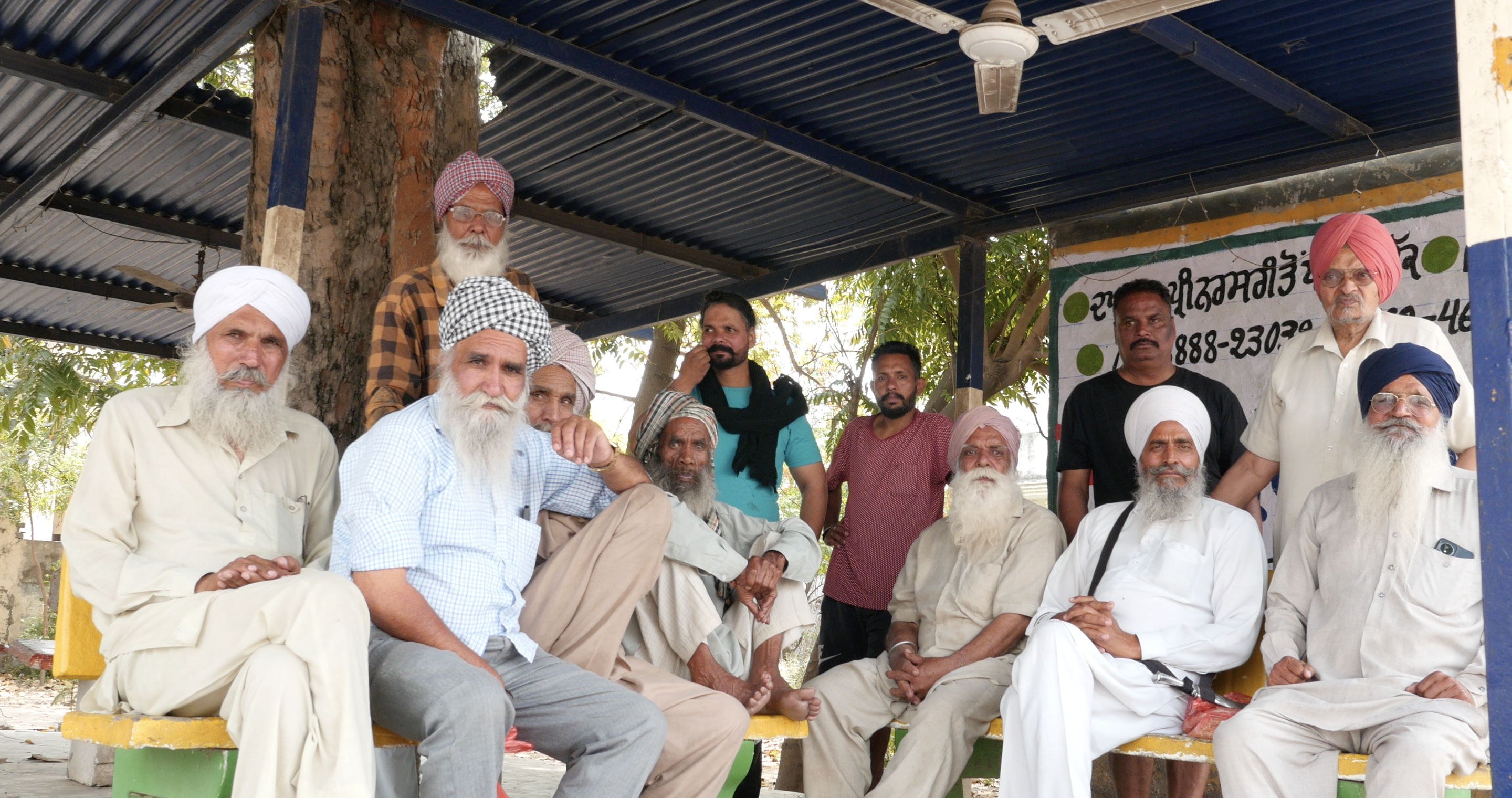
Chuckling amongst themselves, a group of older gentlemen from a Punjabi village called Kanech recall a not-so-distant past in which the only foodstuff they would have to purchase was salt, so self-sufficient were they. With wistful nostalgia the men take turns regaling the sunburned and dusty foreigner with tales of days gone by, their bearded faces smiling and turban-bound heads nodding in agreement with the recollections of their friends. They are of a generation that bridge the gap in the domestic norms of yesterday and today. As young adults, their parents would have been the first to accept the new technology and status quo. Perhaps to describe them as ‘accepting’ is a suggestion that implies autonomy beyond the reality of the role these people played in shaping their own destiny. Their eyes do not tell of remorse; no, more a realisation of what they may have dreaded from the beginning. Now, they say, it seems people are becoming sick more often, spending more money on pharmaceutical medication. They are not wrong. The grimly-coined ‘Cancer Train’ follows a route from the Punjabi city of Bathinda to Bikaner in Rajasthan. The place of departure: a carcinogen hotspot. The destination: a reprieve of state-subsidised treatment. Even the cost of a train ticket is waived for patients and heavily discounted for those accompanying them. This government-led initiative might, to the optimist, seem like altruism at its finest, a country doing right by its citizens. To the pessimist it is the action of a guilty party.
The Green Revolution has for decades promoted monocropping, which is the practice of growing just a single kind of crop on the same land at any given time, and has provided the technological means for carrying it out. Farms with just one type of crop run a higher risk of losing their entire harvests to insect pests. This is because specific insect species tend to favour only certain crops. The fewer crop varieties one has, the higher the risk of complete decimation. A risk spread is a risk lessened. Having total devotion of land to crop production is a method which leans the farmer to be dependent on agricultural chemicals. Without reservoirs of wilderness, there exists no space for wild predators of the pest species. Allowing nature to strike its own balance would likely reduce yields as space would be dedicated to the wild as opposed to the wheat. This must seem utterly unthinkable if one’s view stretches only as far as short-term profit. Unfortunately the only long-term element in all of this is ecological damage. Chemicals are deposited onto the land to such an extent that they seep into ground water where they accumulate and contaminate that which the public consumes. This is one of the reasons that seats are hard to come by on the Bathinda to Bikaner service.
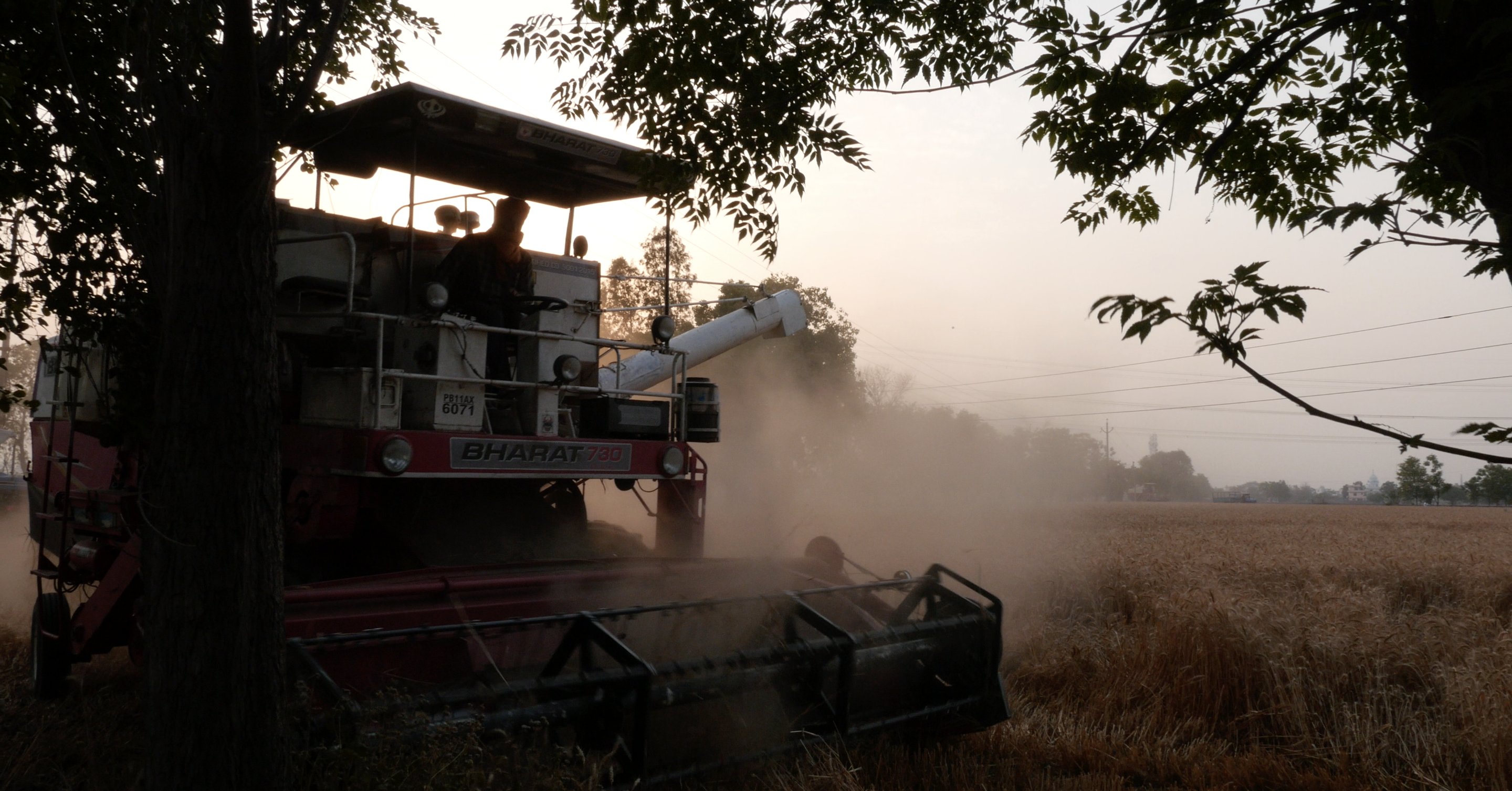
The older farmers have experienced life without this pervading danger. Their children have not known life without it. And yet some want out. The economic stability ensured by the Minimum Support Price is wavering. The fact that nature cannot support this type of farming system means nutrients for crops and protection against pests must be purchased and applied by people and their machines. These overheads are rising fast and have in many cases reached a point at which the Minimum Support Price does not even cover costs. Farmers are working at a financial loss. The toll this takes on agricultural communities is devastating. People feel trapped. Their land cannot provide without expensive inputs and would take years to recover its natural ability to support crop growth. Psychological health is waning and many wonder how things became so desperate.
At the end of the 19th century, a man called William Crookes addressed a hall in Bristol filled with some of the brightest scientific minds the day had to offer. It was here that Crookes, despite his name, made a straight-shooting proclamation of prophetic proportion. In twisted Victorian fashion, his concern stretched only as far as the land inhabited by white people. While racially skewed, his message was clear: the population of bread-eaters would soon outstrip the production of wheat and more productivity was required from existing farmland. As the centuries rolled on, the successful industrial synthesis of nitrogen was achieved. This meant near-barren earth could be treated with a manufactured product to provide it with the life-giving capability formerly only possible through careful nurturing and intentional raising of certain plants which put nitrogen into the soil as opposed to removing it. To satisfy the world’s need for wheat these techniques were replaced with the situation that is now faced by those in Kanech and countless other farming communities.
And so as the Cancer Train again departs on its tragic route, who knows what the next stop will be on the way to satiating the masses?

 The Natural Investigation
Leave a comment